What plant?
Common names are not enough. Species, plant part and harvest form come first.
 PLANTÆ PRESENTS · BOTANICAL SCENTS
Fragrance begins before the bottle—with a living plant, a growing place and the person who knows how to draw out its scent.
The Scent Garden is where Plantæ becomes sensory. Each composition starts as a botanical record, carries its growing and extraction story, and reaches the shop only after the bottle can answer three questions.
Common names are not enough. Species, plant part and harvest form come first.
The place and the route matter—especially when a plant has crossed cultures and continents.
Distilled, expressed or extracted; carried in what; documented by whom.
 ONE QUIET FORMAT
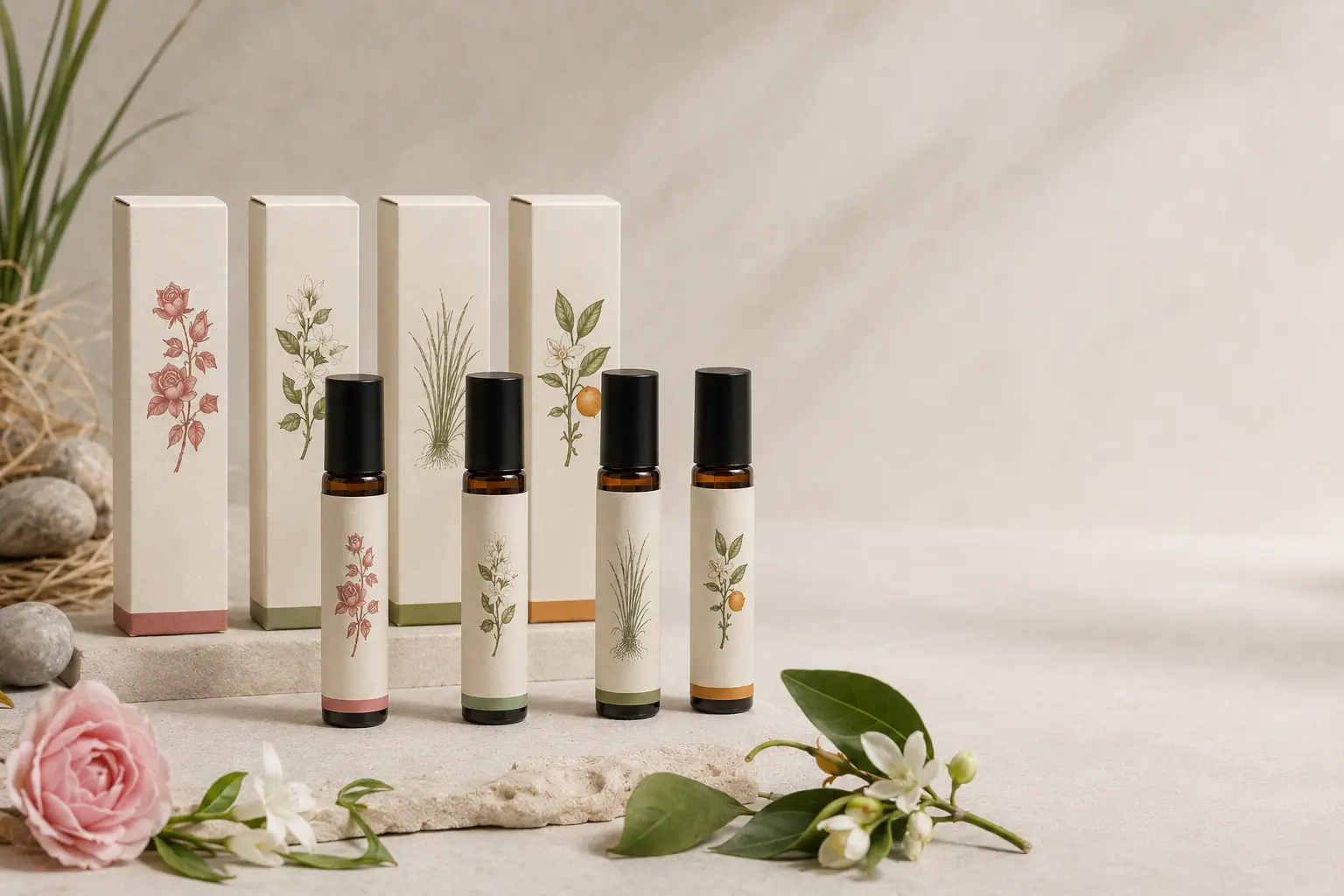
A small amber roll-on travels easily and protects an oil-based composition from light. The warm ivory pack leaves room for the botanical drawing, batch story and a direct path into Plantæ Origin.
These are formulation briefs, not finished inventory. Names, ingredients, claims, price and availability stay provisional until source evidence is complete.
Gulab
Jasmine
Vetiver
Orange blossom
“Origin” is rarely one pin. It can be wild range, a cultivated hybrid, a trade route, a court fashion, or the place that mastered an extraction. The final Plantæ notes will keep those layers separate.
Damask rose is recorded as a hybrid rather than a simple wild-origin species. In South Asia, its perfume story became entangled with Mughal court culture and the long attar tradition of Kannauj.
Read the Kannauj storyOften called Arabian jasmine in English, Jasminum sambac is placed by Kew from Bhutan to India. Its widespread cultivation shows how a familiar name can obscure a plant’s botanical geography.
Open Kew recordKew records vetiver’s native range from northeast India to Indochina and its introduction across many tropical regions, including Pakistan. The aromatic root anchors its perfume identity.
Open Kew recordKew records bitter orange as a South-China cultigen introduced widely, including Italy and Pakistan. Its flower distillate later took the name “neroli” through seventeenth-century Italian court fashion.
Read the ingredient historyFor the draft experience, this Robertet film follows vetiver through landscape, harvest and transformation. It sets the documentary tone for future Plants Mall films made closer to our own suppliers.
Watch on YouTubeA QR path will eventually open the complete source record. Until each field is verified, the product remains in sourcing rather than pretending to be finished stock.
Accepted botanical identity, useful part and harvest form.
Growing region, named supplier and the route into Lahore.
Extraction method, carrier oil and formulation percentage.
CoA, allergen declaration, IFRA review and organic certificate when claimed.
Made-on date, lot identity, fill volume and stability record.
Who grew, distilled, formulated, filled and packed the bottle.
The four concepts exist in the backend as zero-stock drafts. They become products only after botanical identity, safety documentation, packaging compatibility, landed cost and opening inventory are all real.