

Free shipping on orders over Rs 3,000
Delivering from Lahore
Help & supportView cart
Home/Plant origins
PLANTAE · THE WORKING FARM

Walk the year.
Meet every origin.

59 source plants are placed in the order a Punjab farm moves: Rabi acreage, spring propagation, Kharif fields, orchards and specialist climates—then outward through eleven nursery landscapes from Pattoki and the northern terraces to Ukraine, Canada and Iran.

Growing territories16five crop chapters and eleven nursery landscapes
Source plants59botanical origins in the living index
Reference climateLahorelocal seasons and temperature orientation
Nursery landscapes11Punjab, mountain, water and three international nursery routes
THE LIVING INDEX, PLACED BACK ON THE LAND

59 origins, in cultivation order.

Begin with Rabi sowing, pass through spring propagation and Kharif acreage, then enter the orchard and specialist climates. The nursery horizon follows as a separate living territory. Temperature bands are orientation—not a substitute for local crop advice.

59 plant origins shown

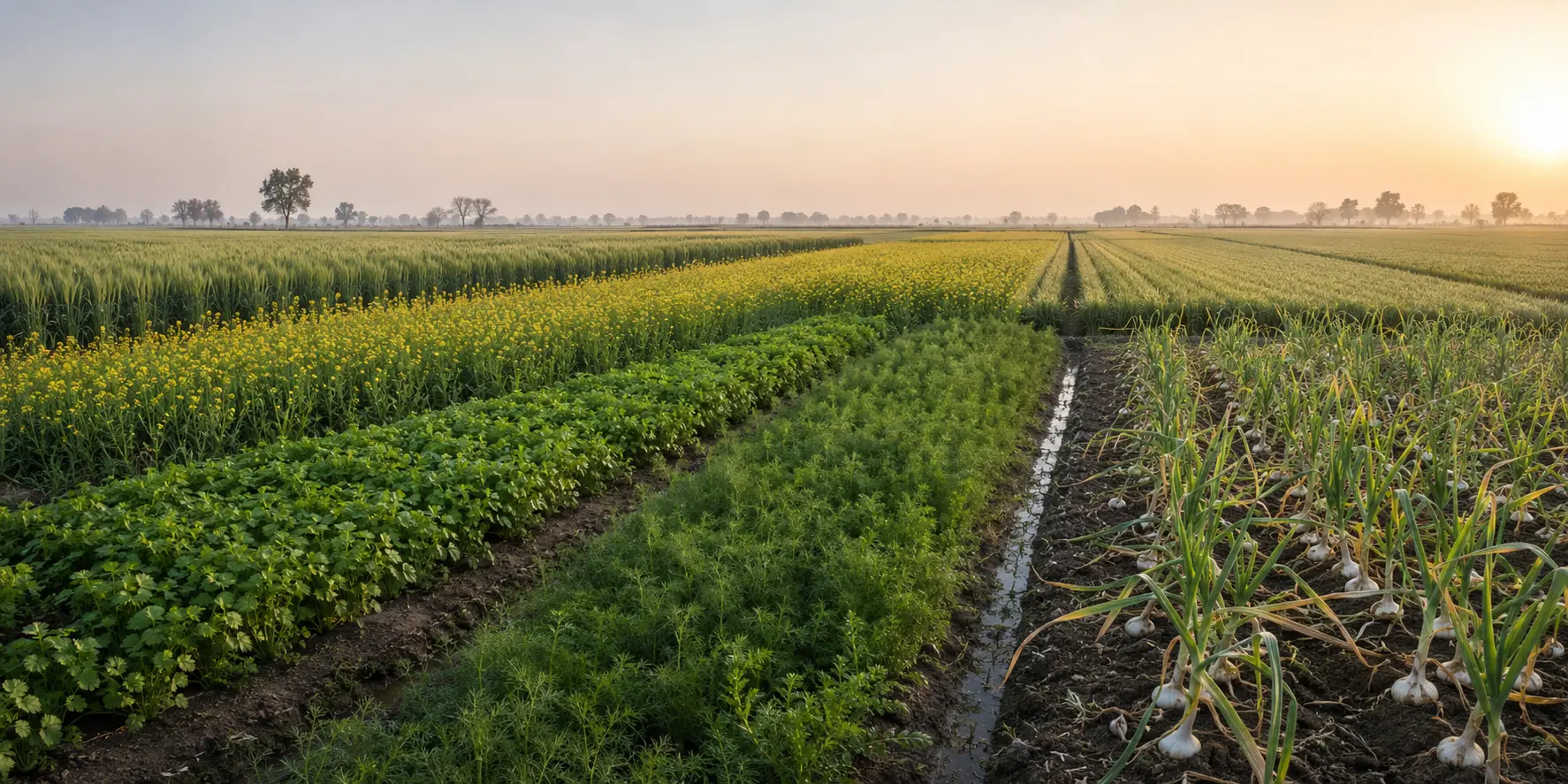
CULTIVATION 01 · COOL-SEASON FIELD CYCLE

Rabi acreage

Walk first through Punjab’s cool-season acreage: cereals, pulses, oilseeds, roots and seed spices established as summer heat retreats.

Field window
Typical sowing: October–December · harvest: February–April
Temperature
Active growth orientation: about 10–25°C
Lahore position
Direct seasonal field fit around Lahore, subject to crop, cultivar, soil and water.
Wide Punjab Rabi farm with wheat and oat acreage, flowering mustard, coriander, fennel and garlic beside an irrigation furrow
Names sit over the crop they identify. Tap one to remain inside Plantæ.

Swipe the field sideways. Tap a crop name to stay in the landscape.

01 · BOTANICAL NAME INDEX

17 source plants, each with a small visual identity. Select one to open its field note without leaving Plantæ.

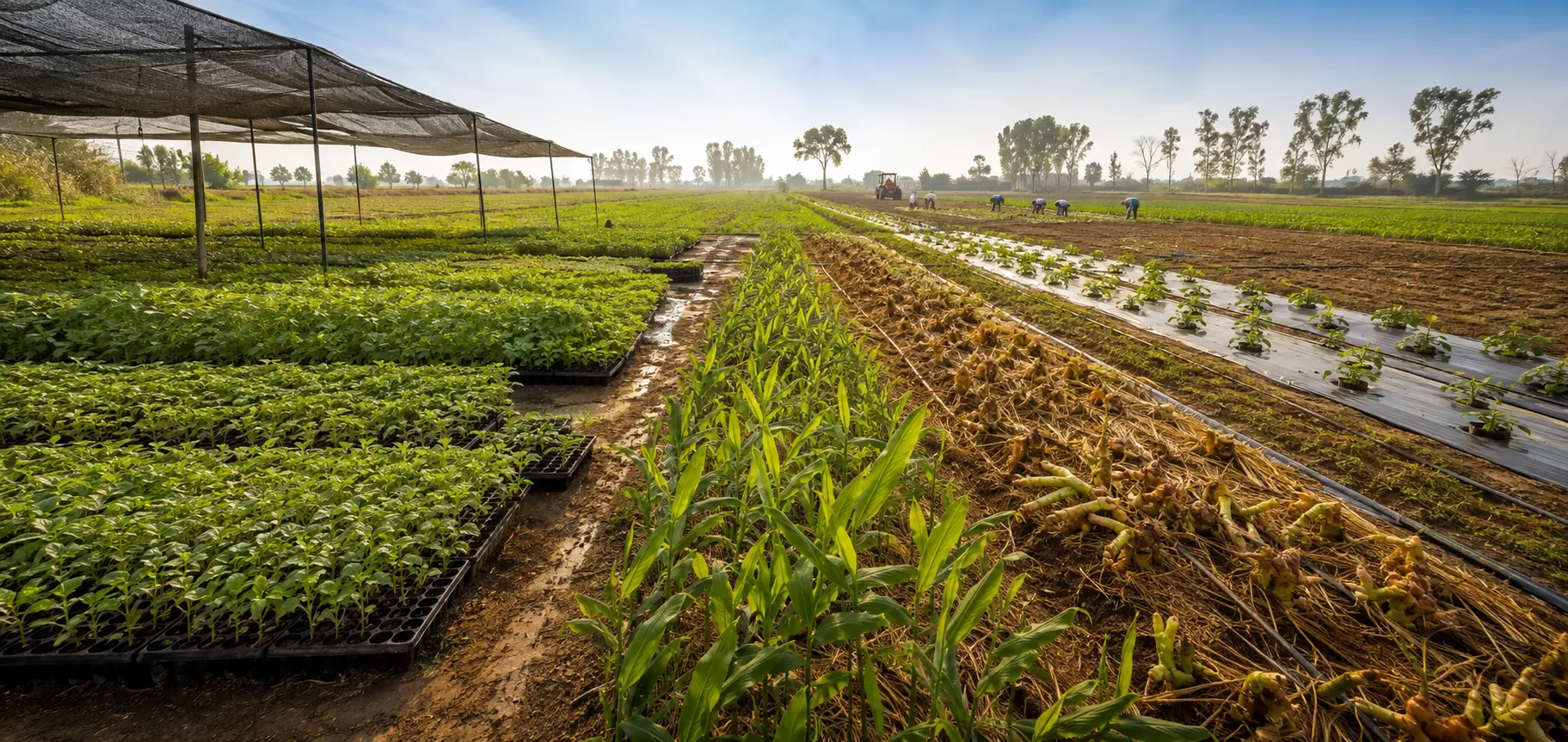
CULTIVATION 02 · PROPAGATION AND PROTECTED ESTABLISHMENT

Spring establishment

The farm narrows into propagation beds, seedling trays and rhizome rows. Tender crops are started, hardened and moved before severe heat arrives.

Field window
Typical start: February–April; some crops extend with shade and irrigation
Temperature
Establishment orientation: about 18–30°C
Lahore position
Managed Lahore fit: nursery timing, mulch, shade and irrigation matter more than a zone label.
Commercial Punjab propagation area with shaded seedling benches, young herb rows, rhizome beds, field workers and a tractor
Names sit over the crop they identify. Tap one to remain inside Plantæ.

Swipe the field sideways. Tap a crop name to stay in the landscape.

02 · BOTANICAL NAME INDEX

11 source plants, each with a small visual identity. Select one to open its field note without leaving Plantæ.

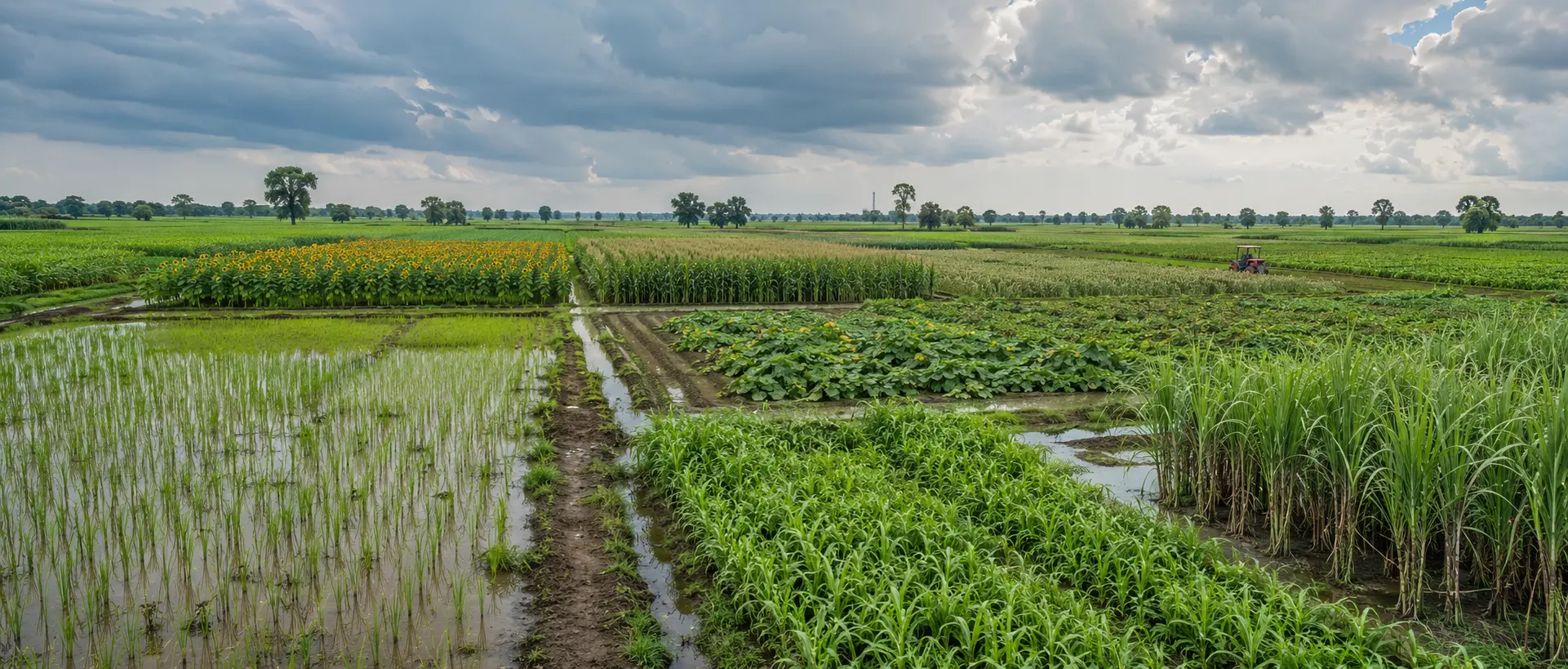
CULTIVATION 03 · WARM-SEASON AND MONSOON FIELD CYCLE

Kharif & monsoon acreage

Rain, heat and irrigation reshape the land into rice, maize, vines, oilseeds and tall grasses—the broadest, most kinetic part of the farm.

Field window
Typical establishment: April–July; harvest varies by crop and sowing
Temperature
Active growth orientation: about 24–35°C
Lahore position
Strong warm-season field fit where irrigation, drainage and monsoon risk are actively managed.
Large monsoon farm landscape with rice paddies, sunflower, maize, pumpkin vines, sugarcane, millet and a working tractor
Names sit over the crop they identify. Tap one to remain inside Plantæ.

Swipe the field sideways. Tap a crop name to stay in the landscape.

03 · BOTANICAL NAME INDEX

10 source plants, each with a small visual identity. Select one to open its field note without leaving Plantæ.

CULTIVATION 04 · LONG-LIVED TREES, SHRUBS AND SHELTER BELTS

Orchard & perennial belt

The seasonal field gives way to years of growth: fruit blocks, flowering shrubs, windbreaks, shade and deep-rooted trees planned around water and spacing.

Field window
Common establishment windows: February–March or August–September
Temperature
Establishment orientation: about 18–32°C
Lahore position
Species and cultivar specific; citrus, mango, moringa, neem and sidr need different siting and care.
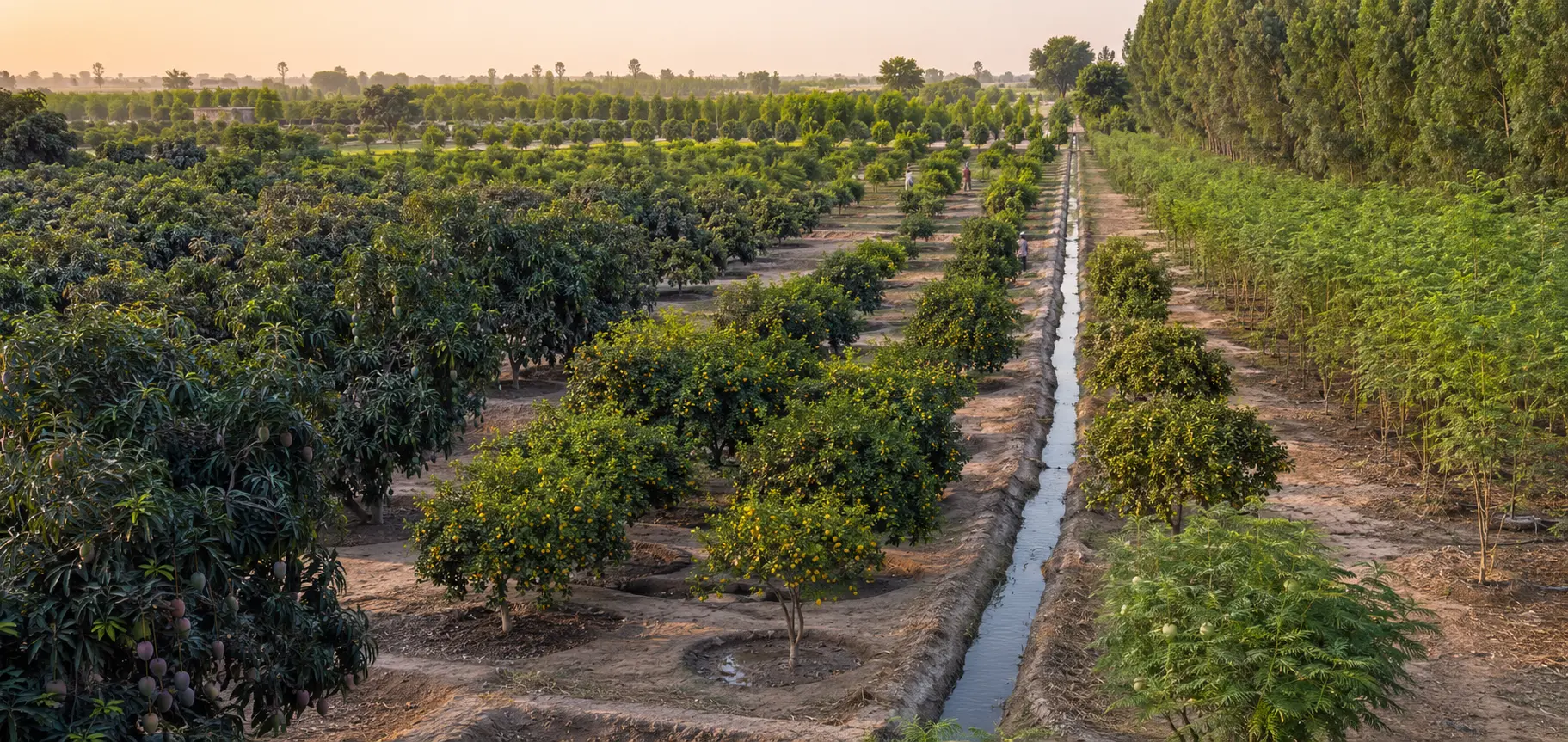
Large irrigated Punjab orchard with mango and citrus blocks, moringa and windbreak trees stretching to the horizon
Names sit over the crop they identify. Tap one to remain inside Plantæ.

Swipe the field sideways. Tap a crop name to stay in the landscape.

04 · BOTANICAL NAME INDEX

8 source plants, each with a small visual identity. Select one to open its field note without leaving Plantæ.

CULTIVATION 05 · ALTITUDE, HUMIDITY, POND OR PROTECTED-CULTURE SYSTEMS

Specialist climates

Some origins belong in mountain valleys, humid shade, tropical belts or water. Plantae keeps them visible without pretending every crop belongs in one Lahore field.

Field window
Species and site specific; no single Lahore sowing window
Temperature
Use a crop-specific climate envelope—not one shared band
Lahore position
Often an alternative-region or controlled-environment proposition, not an open-field Lahore promise.
Specialist crop research farm with shaded pepper vines, protected tree bays, humid understory crops and a managed aquatic pond
Names sit over the crop they identify. Tap one to remain inside Plantæ.

Swipe the field sideways. Tap a crop name to stay in the landscape.

05 · BOTANICAL NAME INDEX

13 source plants, each with a small visual identity. Select one to open its field note without leaving Plantæ.

PLANTAE × NURSERY · CULTIVATION 06

Beyond the field,
the nursery horizon.

Nursery is not a product shelf attached to Plantæ. It now crosses 11 working landscapes and 67 plant identities—from Pattoki acreage to aromatic rows, water beds and dry houses. Select the plant where it grows; commerce waits until you choose to leave the landscape.

NURSERY 06A · THE PATTOKI NURSERY BELT

The farm keeps growing.

Plantæ leaves the crop field and enters Pattoki’s nursery landscape: propagation blocks, orchard saplings, screening rows, shade houses and irrigation laid out at agricultural scale.

Landscape
Wholesale nursery acreage, not an urban garden centre
Farm rhythm
Propagate · establish · harden · dispatch
Lahore connection
Pattoki supply belt to homes, gardens and orchards
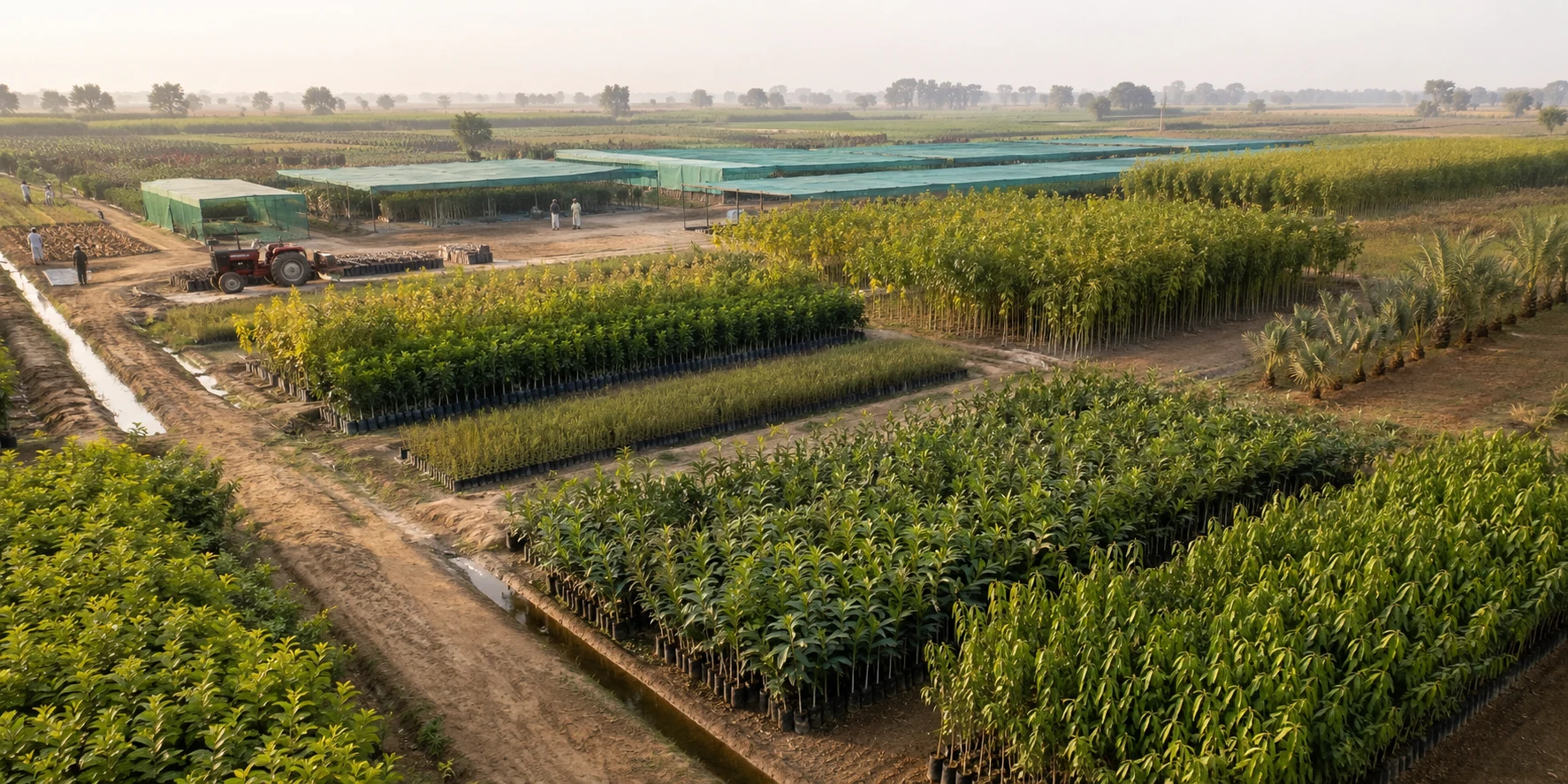
Large working Pattoki nursery farm with shade houses, irrigation, orchard sapling blocks and nursery rows extending to the Punjab horizon
Select a name over the nursery block to open its living note without leaving Plantæ.

Swipe across the nursery landscape. Tap a name to remain inside Plantæ.

NURSERY 06B · SEASONAL COLOUR · CLIMBER LINES

Colour has a calendar.

Seasonal flowers move as timed crops, not permanent decoration. Behind them, climbing plants are trained on long trellis lines before they travel to walls, gates and pergolas.

Cool colour
Petunia and chrysanthemum rise through the cooler months
Warm colour
Vinca and other heat-tolerant rows take over later
Vertical crop
Madhumalti, Allamanda and Bougainvillea train on support
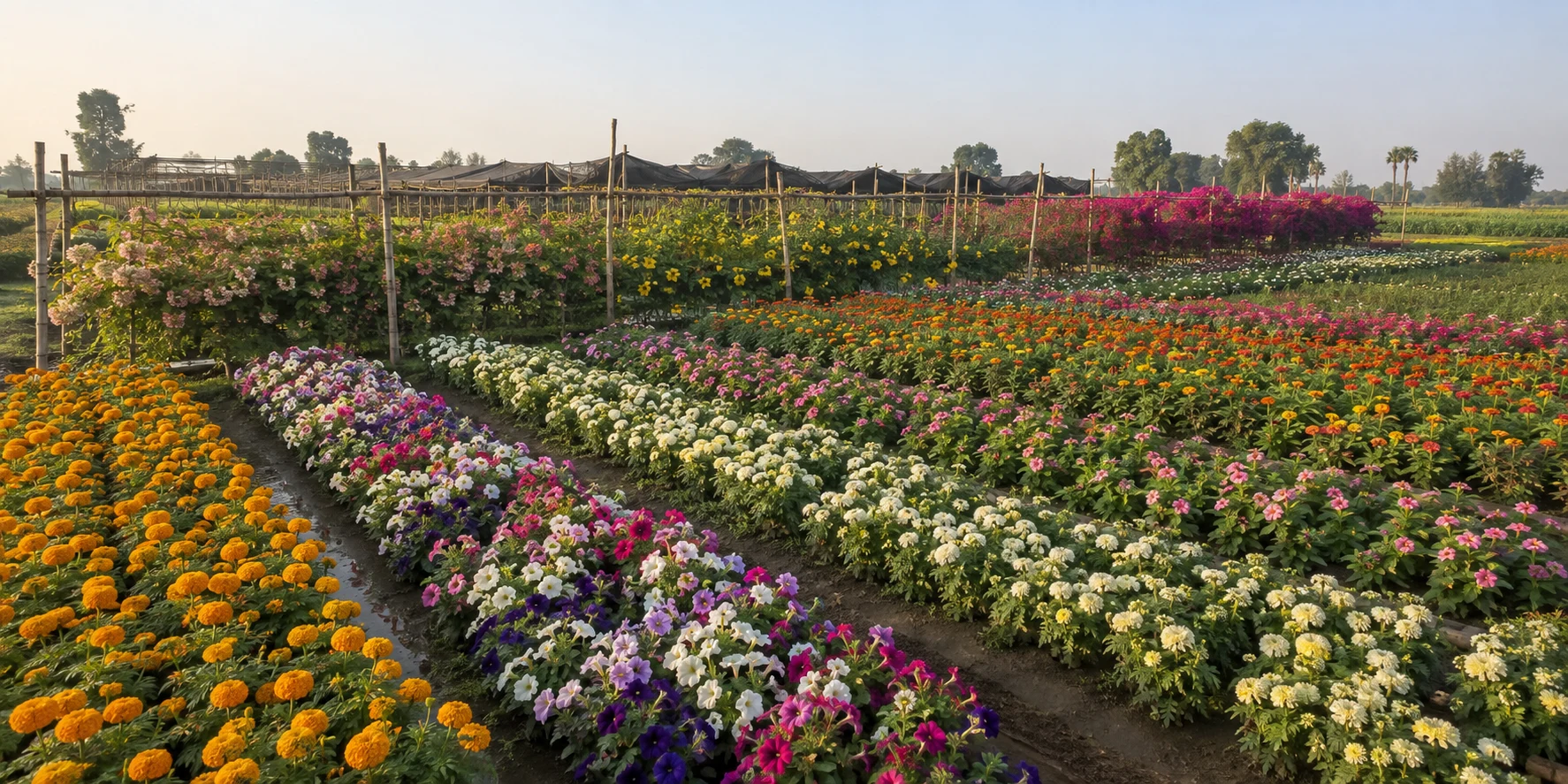
Pattoki nursery acreage with long rows of marigold, petunia, chrysanthemum, vinca and flowering vines on farm trellises
The flower rows change with the season; the pointers stay attached to the living plant, never a packet.

Swipe across the nursery landscape. Tap a name to remain inside Plantæ.

NURSERY 06C · FILTERED LIGHT · INDOOR COLLECTION

Inside the shade house.

The indoor collection still begins on a farm. Plants root and harden under filtered light, irrigation mist and long open aisles before they enter a room, office or sheltered courtyard.

Light
Shade cloth softens Punjab sun without turning the farm into a room
Bench logic
Moisture-loving foliage and dry benches stay separate
Home transition
A hardened plant moves more safely into indoor conditions
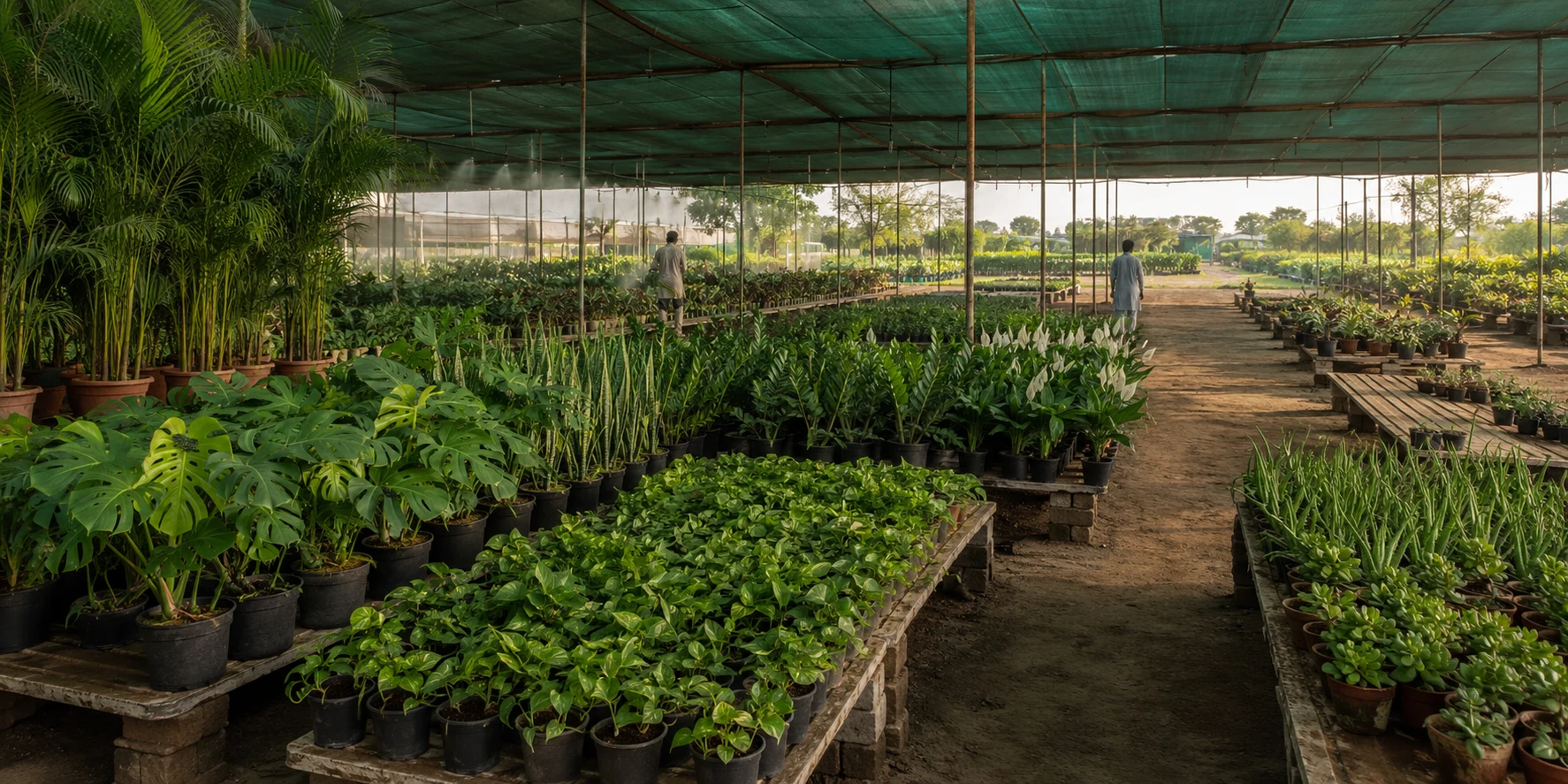
Large Pattoki wholesale shade house with rows of Monstera, snake plants, pothos, peace lilies, areca palms and a dry succulent bench
Select a foliage group to see its nursery rhythm, then choose whether to continue into commerce.

Swipe across the nursery landscape. Tap a name to remain inside Plantæ.

NURSERY 07 · NORTHERN TERRACES · COOL-CLIMATE STOCK

The nursery climbs.

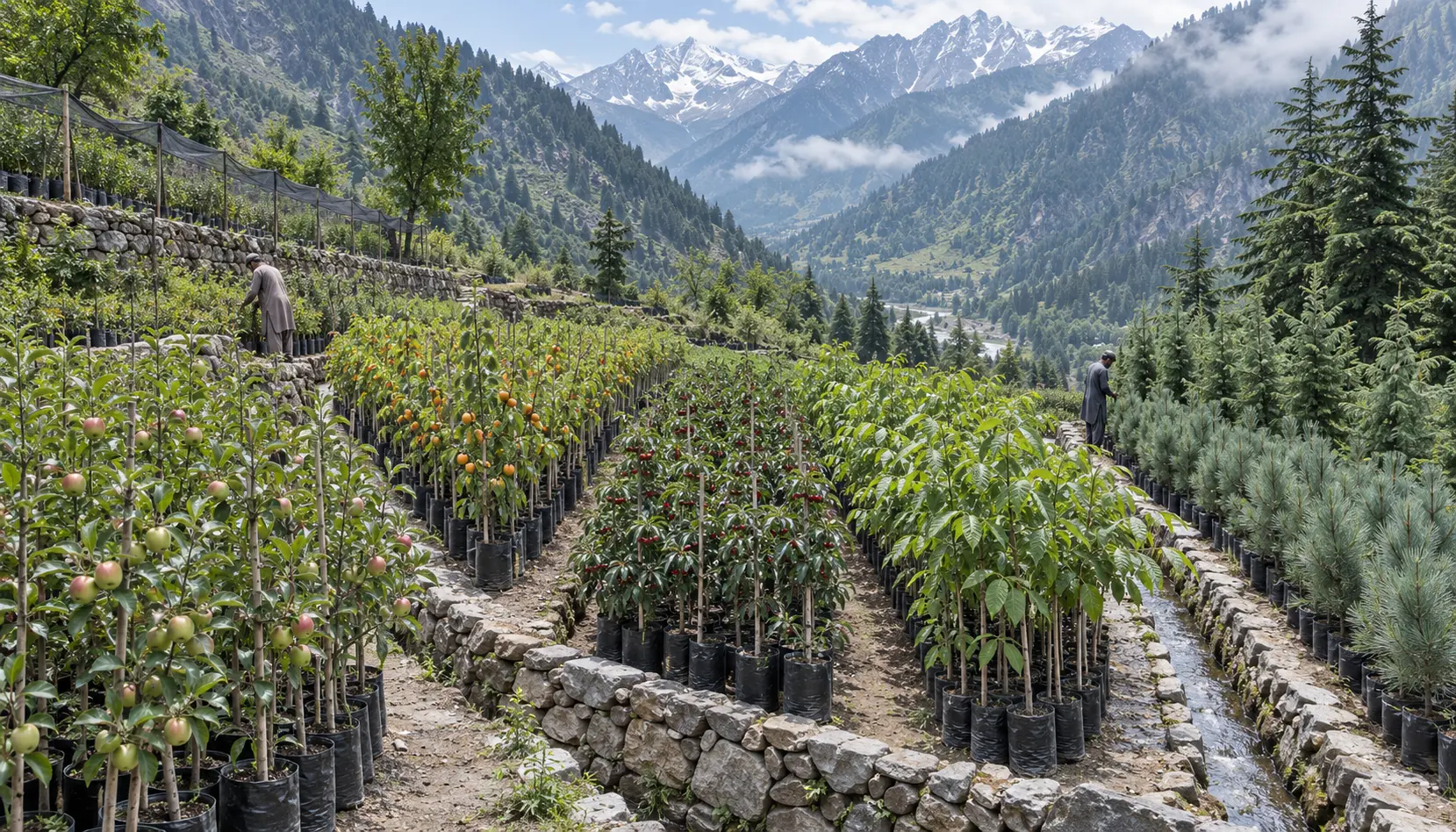
Beyond the Punjab plain, nursery practice follows altitude. Apple, apricot, cherry, peach and walnut move through terraced fruit blocks; deodar and blue pine keep the mountain line visible behind them.

Region
Northern valleys, Kashmir and cool western uplands
Climate rule
Winter chill and destination altitude travel with the plant
Lahore boundary
Low-chill cultivars only where evidence supports the move
Large northern Pakistan mountain nursery with terraced apple, apricot, cherry, walnut and conifer sapling blocks
A mountain plant keeps its climate story. Select a name to see the route and its Lahore boundary.

Swipe across the nursery landscape. Tap a name to remain inside Plantæ.

NURSERY 08 · REGIONAL ARRIVALS · ACCLIMATISATION YARD

Every arrival carries a climate.

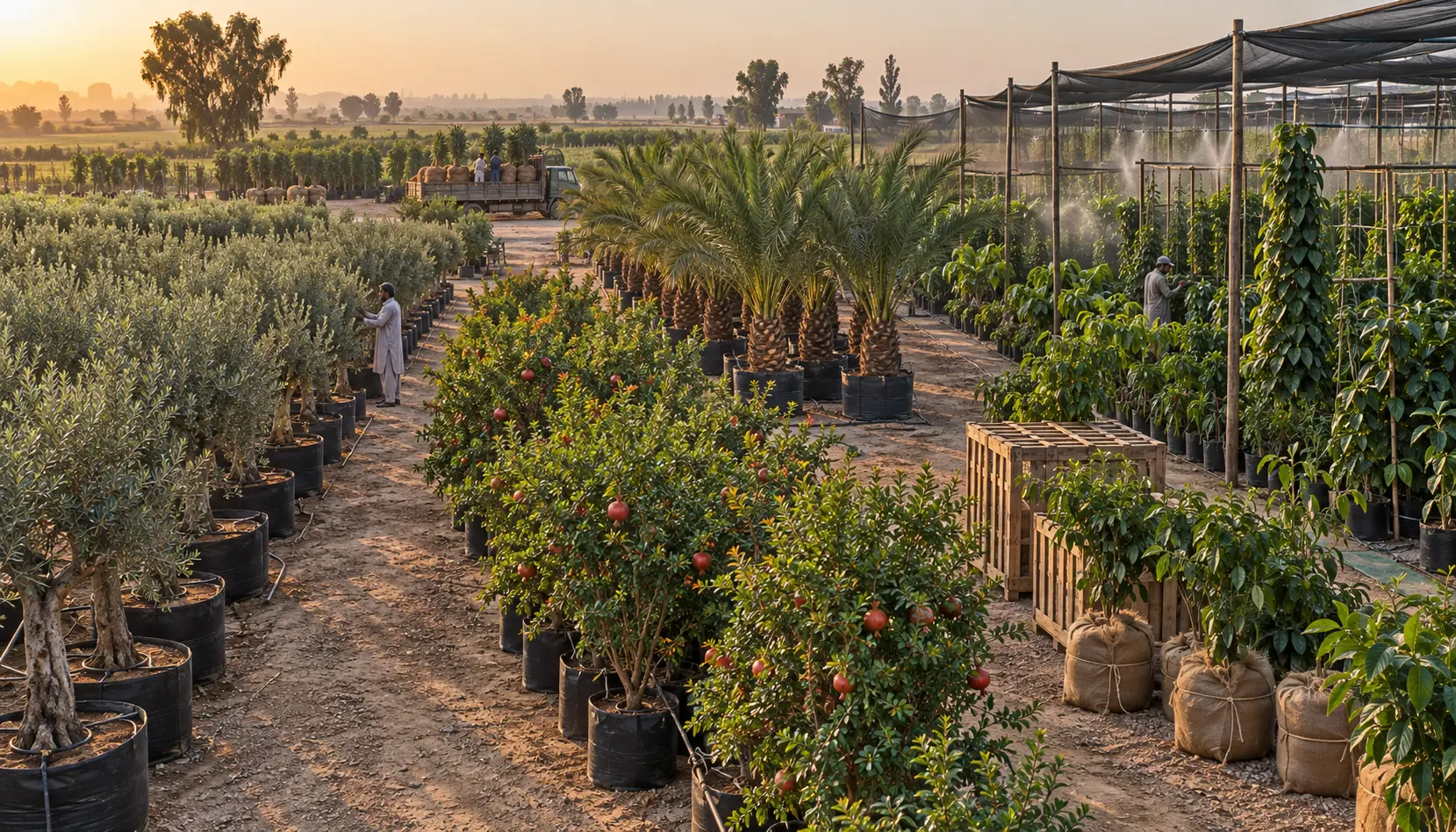
Olive, pomegranate, fig and date palm arrive from drier belts; cinnamon and pepper stay under humid protection. Plantæ shows the route before the nursery asks whether a plant can responsibly leave it.

Dry routes
Potohar, Balochistan, southern Punjab and Sindh
Humid routes
Protected tropical plants remain climate-specific
Commercial rule
Availability never replaces a destination-fit check
Commercial Punjab acclimatisation yard with olive, pomegranate, date palm, cinnamon and black pepper nursery groups
The route is part of the identity: dry-upland, warm-southern or protected-humid stock.

Swipe across the nursery landscape. Tap a name to remain inside Plantæ.

NURSERY 09 · AROMATIC MOTHER STOCK · SCENT AND KITCHEN

Fragrance begins in rows.

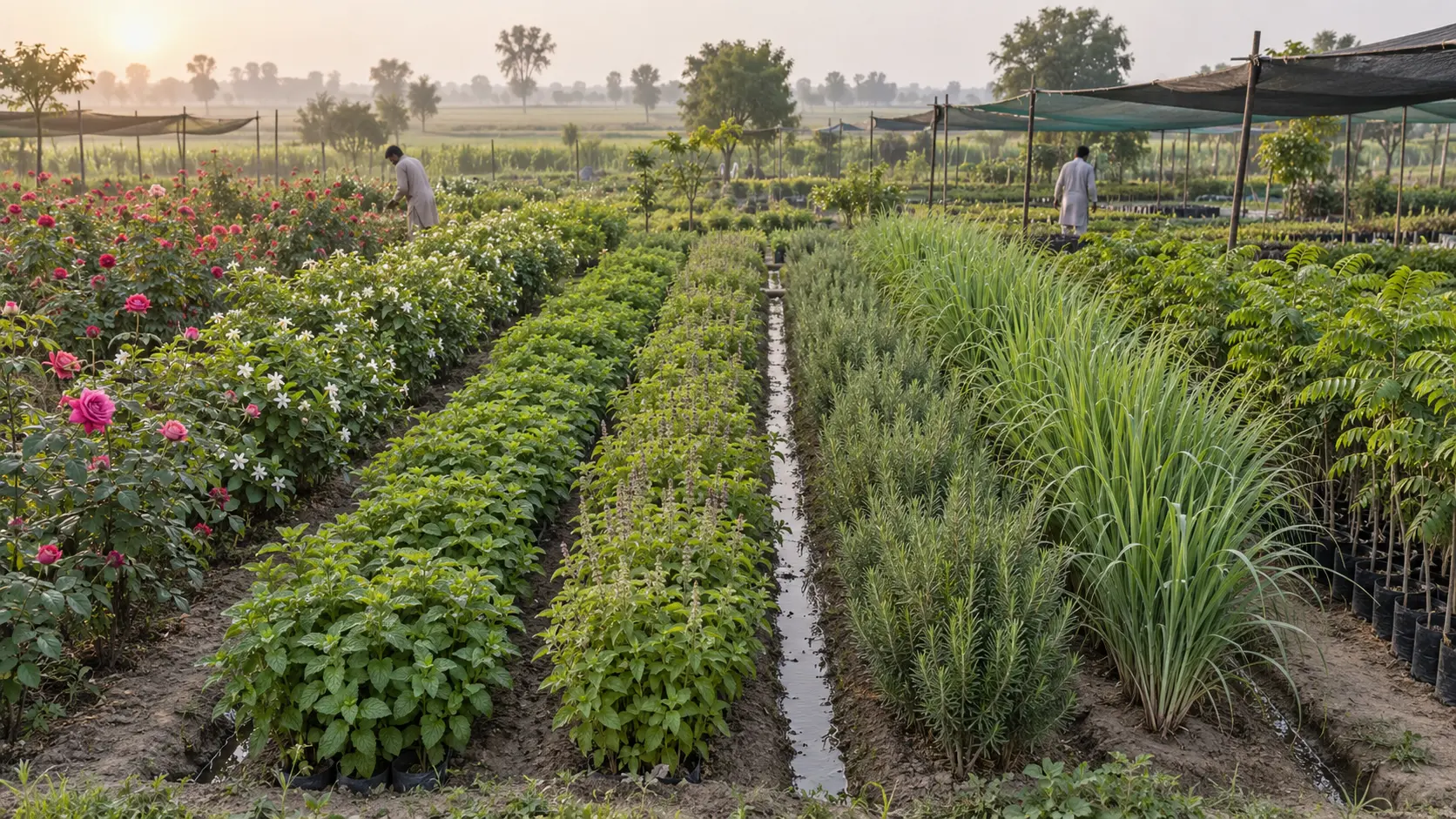
Rose, motia, mint, tulsi, rosemary, lemongrass and curry leaf remain living stock before they become scent, tea, recipe or ritual. This field keeps the plant visible behind every later use.

Mother stock
Cuttings and divisions begin with healthy named plants
Connected routes
Nursery · scent garden · kitchen · recipes
Harvest rule
Aroma depends on species, plant part, season and handling
Large Punjab aromatic nursery with rose, jasmine, mint, tulsi, rosemary, lemongrass and curry leaf growing in distinct farm rows
Select the living source before following it into scent, food or household use.

Swipe across the nursery landscape. Tap a name to remain inside Plantæ.

NURSERY 10 · MONSOON WATER NURSERY · POND AND WET EDGE

Some plants begin in water.

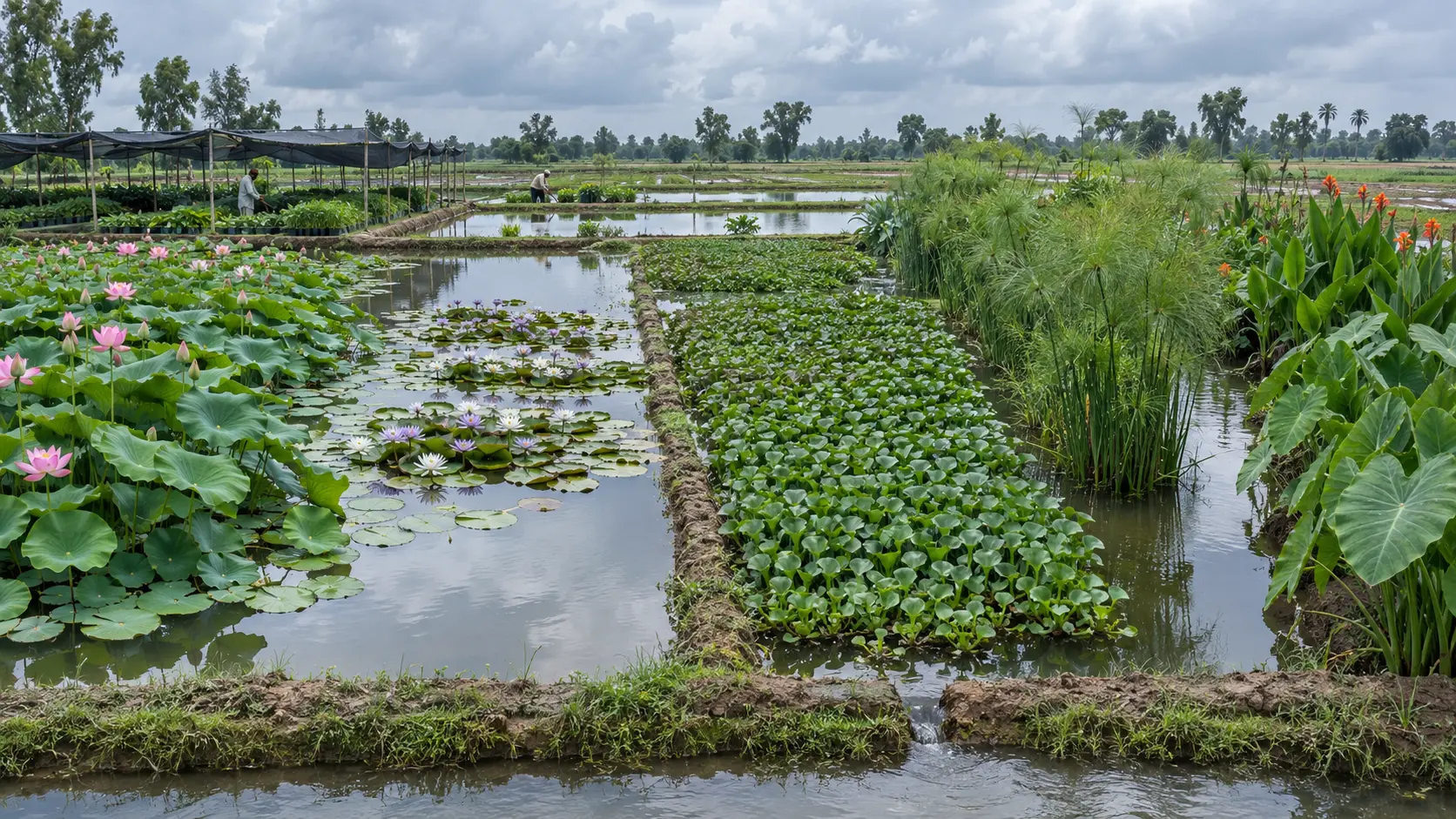
Lotus and water lily root below the surface; singhara spreads as a pond crop; papyrus, umbrella sedge, canna and colocasia occupy the wet margin. The nursery changes its ground to keep each identity honest.

Water depth
Floating, rooted and wet-margin plants occupy different bands
Season
Monsoon growth changes water level, heat and maintenance
Boundary
A pond crop is not sold as an ordinary dry-bed plant
Commercial Punjab water nursery with lotus, water lilies, water chestnut, papyrus, umbrella sedge, canna and colocasia
Read the water band first: pond floor, floating surface or saturated edge.

Swipe across the nursery landscape. Tap a name to remain inside Plantæ.

NURSERY 11 · DRY HOUSE · SUCCULENT HARDENING YARD

Dry is a growing method.

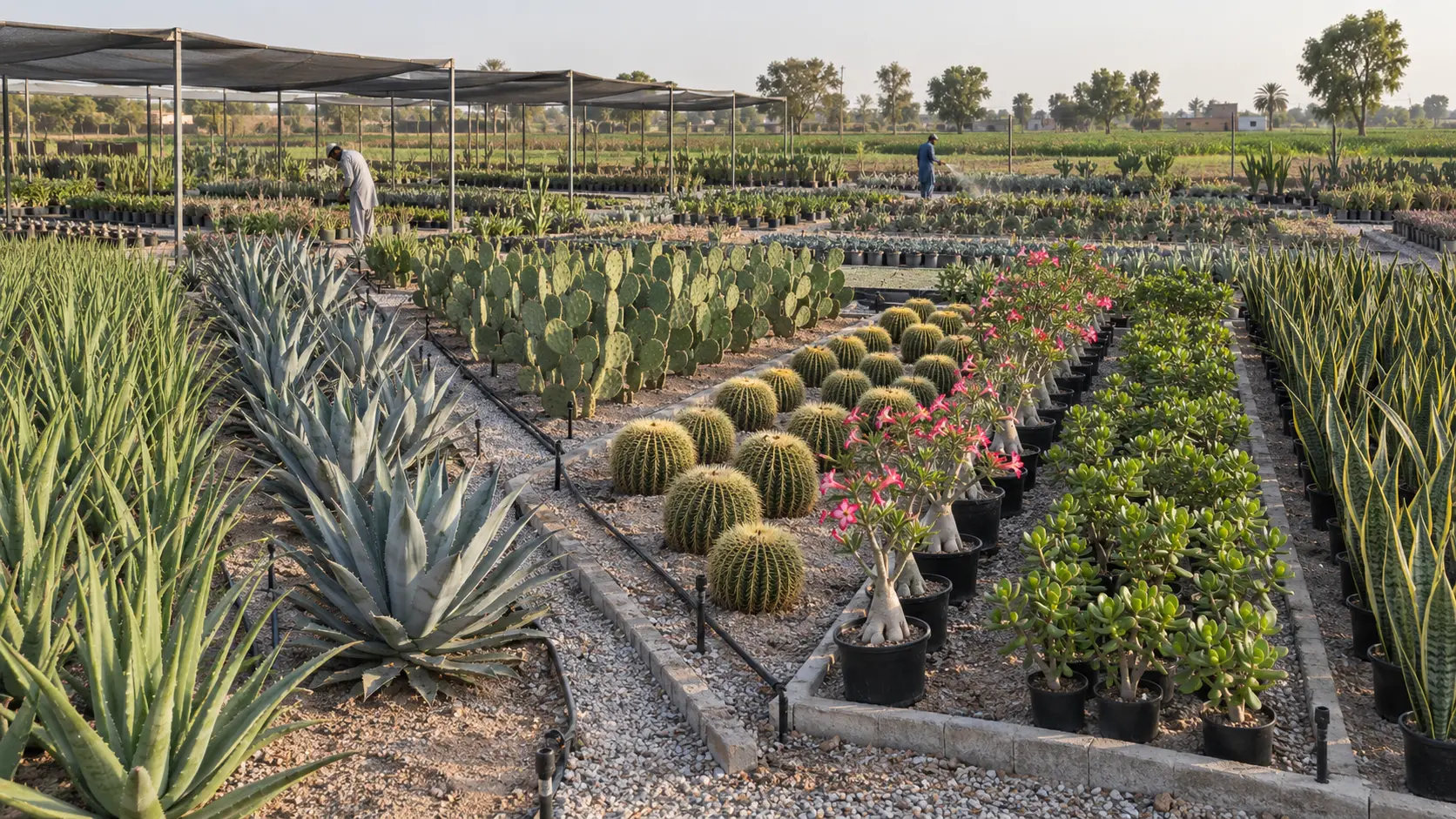
Aloe, agave, prickly pear, barrel cactus, desert rose, jade and snake plant are separated by scale, spine, dormancy and exposure. The dry nursery is spacious because restraint—not crowding—is part of the care.

Root zone
Mineral, fast-draining media prevents chronic wetness
Hardening
Plants move into stronger sun gradually
Monsoon rule
Rain protection matters as much as drought tolerance
Large Punjab dry nursery with aloe, agave, prickly pear, golden barrel cactus, desert rose, jade and snake plants
Select a plant to see its light transition, water rhythm and safe placement.

Swipe across the nursery landscape. Tap a name to remain inside Plantæ.

NURSERY 12 · UKRAINE · BLACK-EARTH NURSERY

The route crosses chernozem.

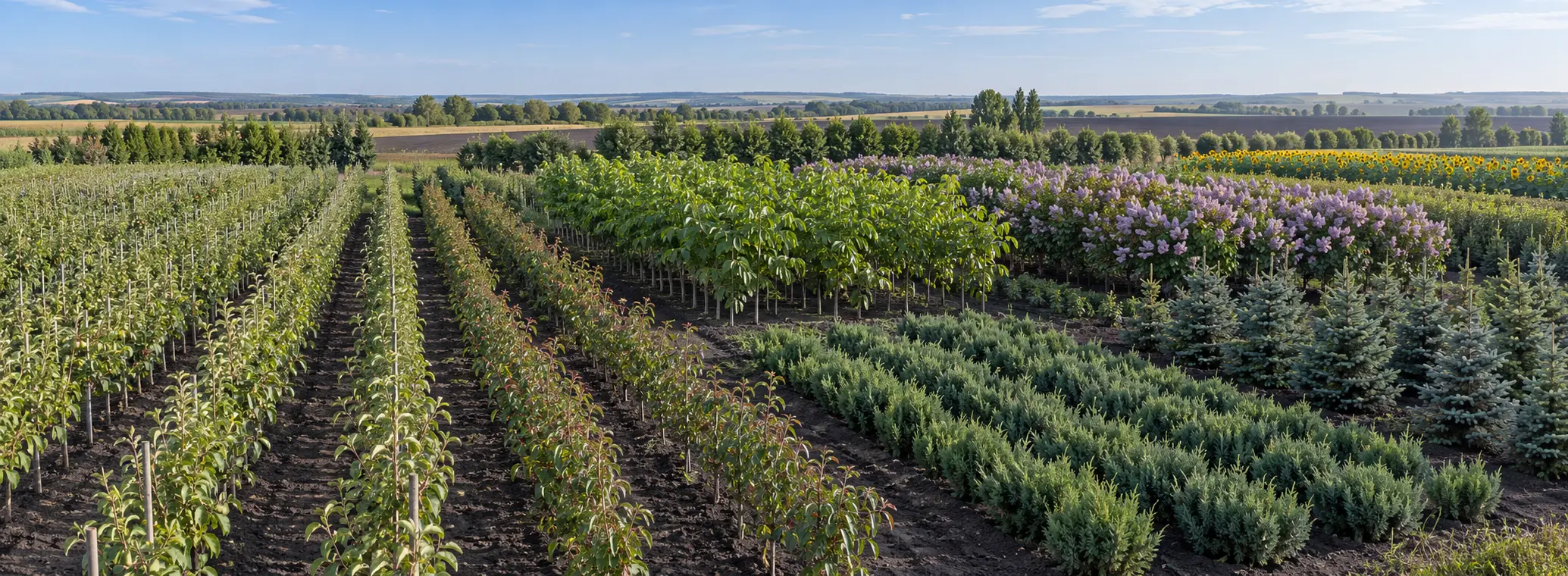
Apple rootstocks, sour cherry, walnut and lilac occupy Ukraine’s deep black-earth nursery rows. Juniper, spruce and sunflower mark the seam between ornamental stock, shelterbelt and broad-acre seed.

Region
Ukraine’s temperate plains and orchard nursery belt
Growing logic
Cold winter · grafted fruit · shelterbelt stock
Punjab boundary
Import the evidence and cultivar—not only the name
Large Ukrainian black-earth nursery with apple, cherry, walnut, lilac, conifers and sunflower seed rows
Select a crop where it stands. The note keeps winter chill and Lahore suitability in the same frame.

Swipe across the nursery landscape. Tap a name to remain inside Plantæ.

NURSERY 13 · CANADA · COLD-CLIMATE NURSERY

Cold is part of the plant.

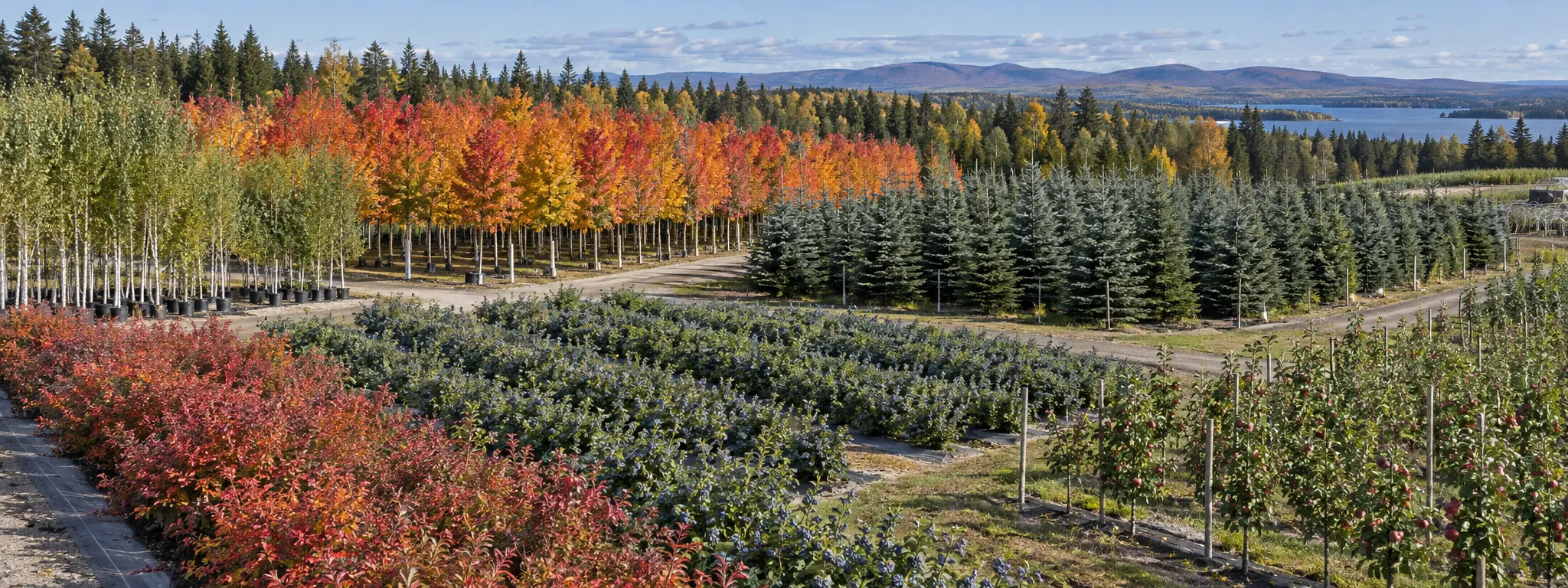
Sugar maple, paper birch and white spruce show the scale of a northern tree nursery. Serviceberry, blueberry and hardy apple bring the edible layer forward without hiding soil acidity or winter breeding.

Region
Boreal edge and eastern hardwood nursery landscapes
Growing logic
Hardiness · dormancy · cool roots · named cultivars
Punjab boundary
Cold hardiness is not the same as warm-winter fitness
Large Canadian cold-climate nursery with maple, birch, spruce, serviceberry, blueberry and apple blocks
The Canadian route distinguishes survival in deep cold from performance in a hot Punjab plain.

Swipe across the nursery landscape. Tap a name to remain inside Plantæ.

NURSERY 14 · IRAN · PLATEAU ORCHARD NURSERY

Water draws the orchard.

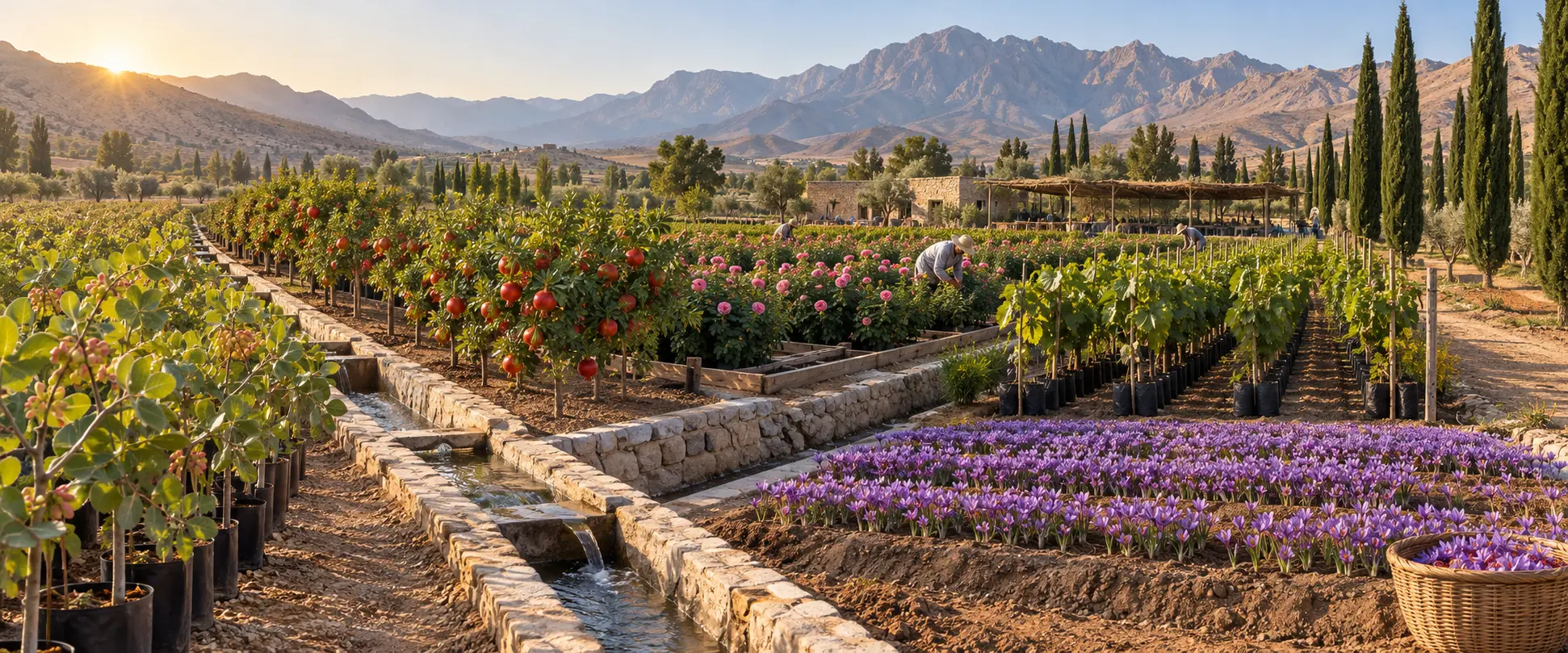
Pistachio, pomegranate, Damask rose, grape, saffron and cypress follow water across a dry plateau. Their movement into Plantæ is cultural and climatic before it is commercial.

Region
Dry Iranian plateau, mountain margins and orchard settlements
Growing logic
Gravity water · dry air · dormancy · harvest craft
Punjab boundary
Monsoon humidity changes the same plant’s behaviour
Iranian plateau nursery with pistachio, pomegranate, Damask rose, grape, saffron and cypress beside irrigation channels
Follow the irrigation line, then open a plant to compare plateau rhythm with Lahore’s heat and monsoon.

Swipe across the nursery landscape. Tap a name to remain inside Plantæ.

THE DELIBERATE EXIT

Plantæ shows where it lives.
Nursery shows what can leave with you.

Pot size, current price, delivery and availability belong on the Nursery side of the threshold.

Enter the Nursery
PLANTAE × CULTURE · ROUTE 15

The plant is living.
So is the meaning.

Plants connect scripture, household practice, pilgrimage, memory, food and art—but never in only one way. Walk four documented routes, open each plant in place, and keep cultural meaning separate from cultivation advice, medicine and commerce.

15A · ISLAM · SCRIPTURE, GARDEN AND FOODWAY

Named in revelation, grown in the world.

The Qur’an names plants through signs, provisions, cultivated gardens and metaphor. Plantæ keeps the botanical identity beside the textual setting, without turning scripture into a health claim or a sales label.

Read the route source
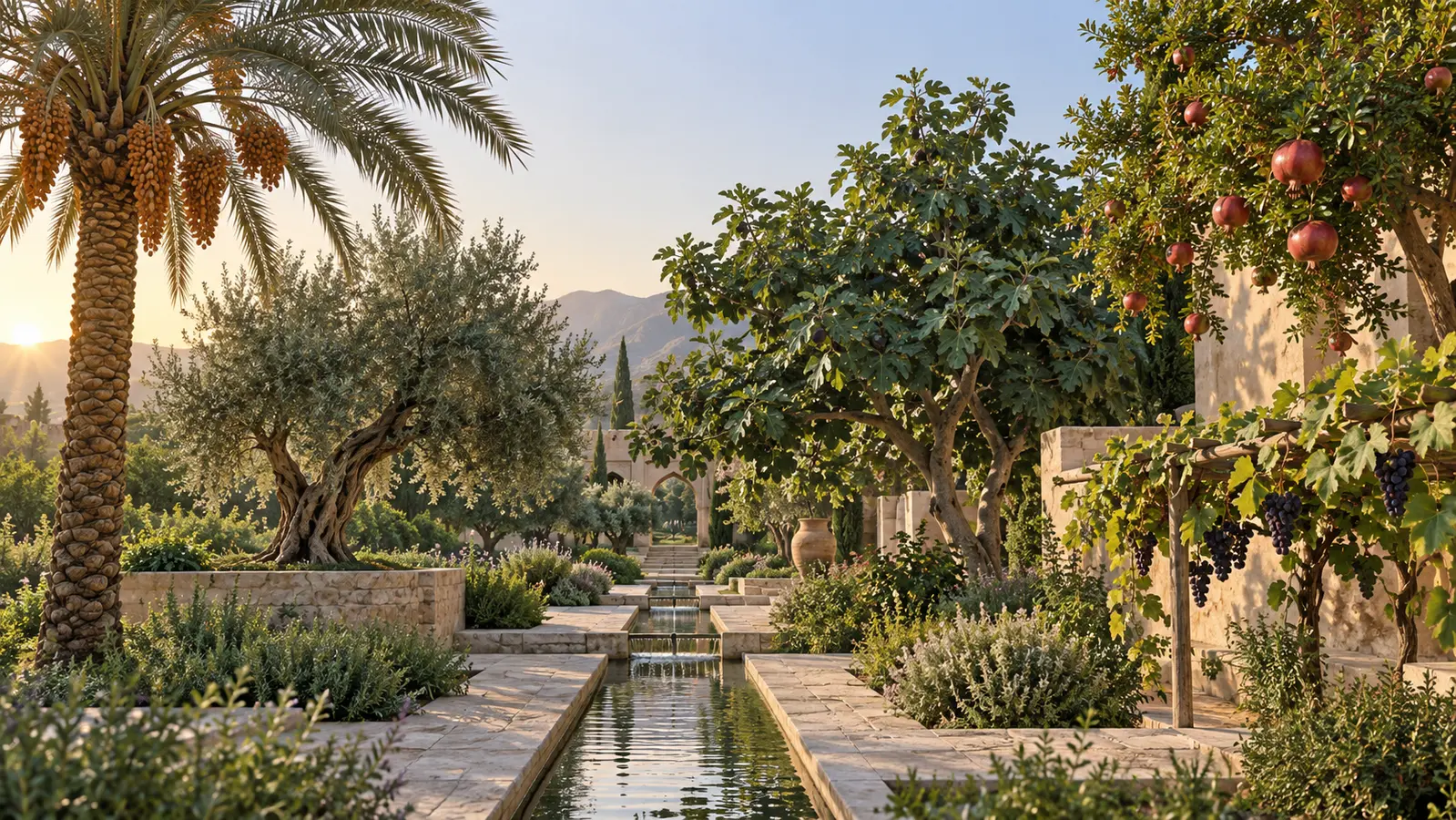
Garden landscape with date palm, olive, fig, pomegranate and grape vine
Royal Botanic Gardens, Kew · Plants of the Qur’an

Swipe across the cultural landscape. Tap a plant to open its sourced note.
15B · HINDU TRADITIONS · COURTYARD, OFFERING AND GROVE

A plant may be tended as presence.

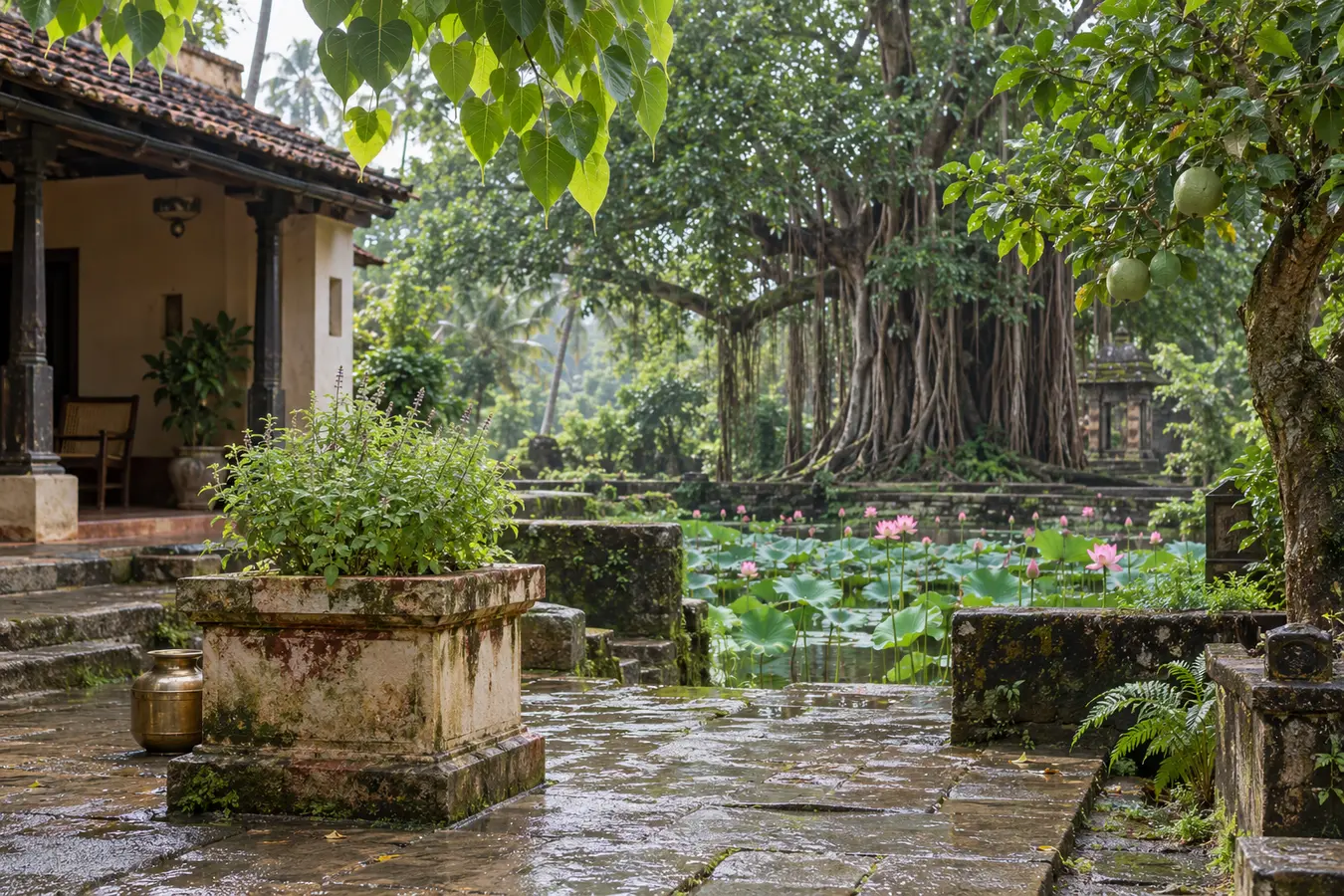
Across diverse Hindu communities, plants enter household devotion, temple offering, story and protected grove. The route uses ‘many traditions’ deliberately: no single practice speaks for every region or lineage.

Read the route source
South Asian courtyard and grove with tulsi, lotus pond, peepal, banyan and bael
C.P.R. Environmental Education Centre · Sacred plants

Swipe across the cultural landscape. Tap a plant to open its sourced note.
15C · BUDDHIST TRADITIONS · AWAKENING, PURITY AND PASSING

A life remembered through trees.

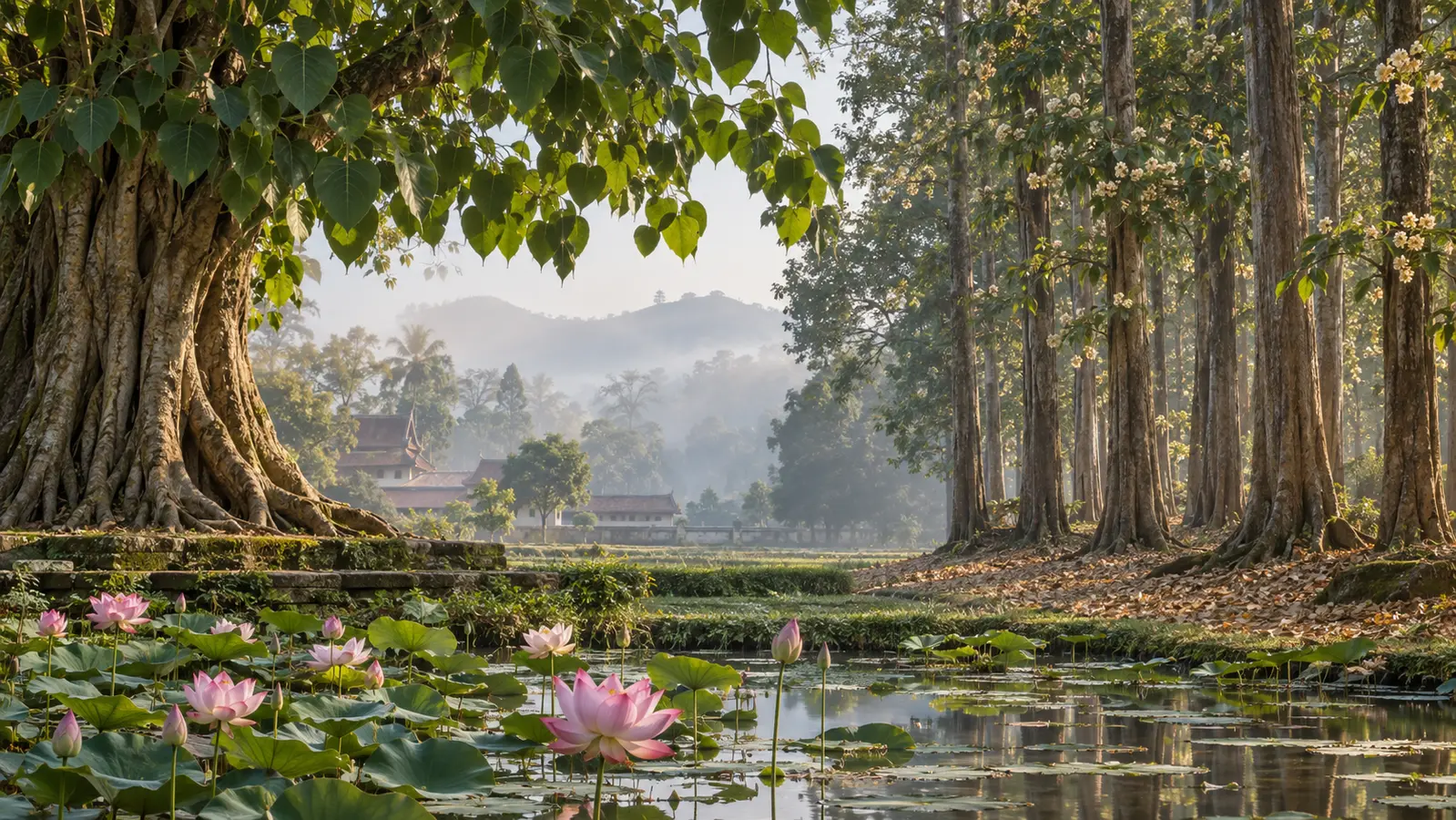
Buddhist landscapes connect key events, symbols and living lineages to trees and flowers. The Bodhi tree is a specific sacred fig identity; lotus and sal carry other histories rather than acting as interchangeable decoration.

Read the route source
Buddhist grove landscape with Bodhi tree, lotus pond and sal trees
The Met · Tree & Serpent

Swipe across the cultural landscape. Tap a plant to open its sourced note.
15D · SIKH HERITAGE · LIVING WITNESS IN PUNJAB

Sometimes the connection is one old tree.

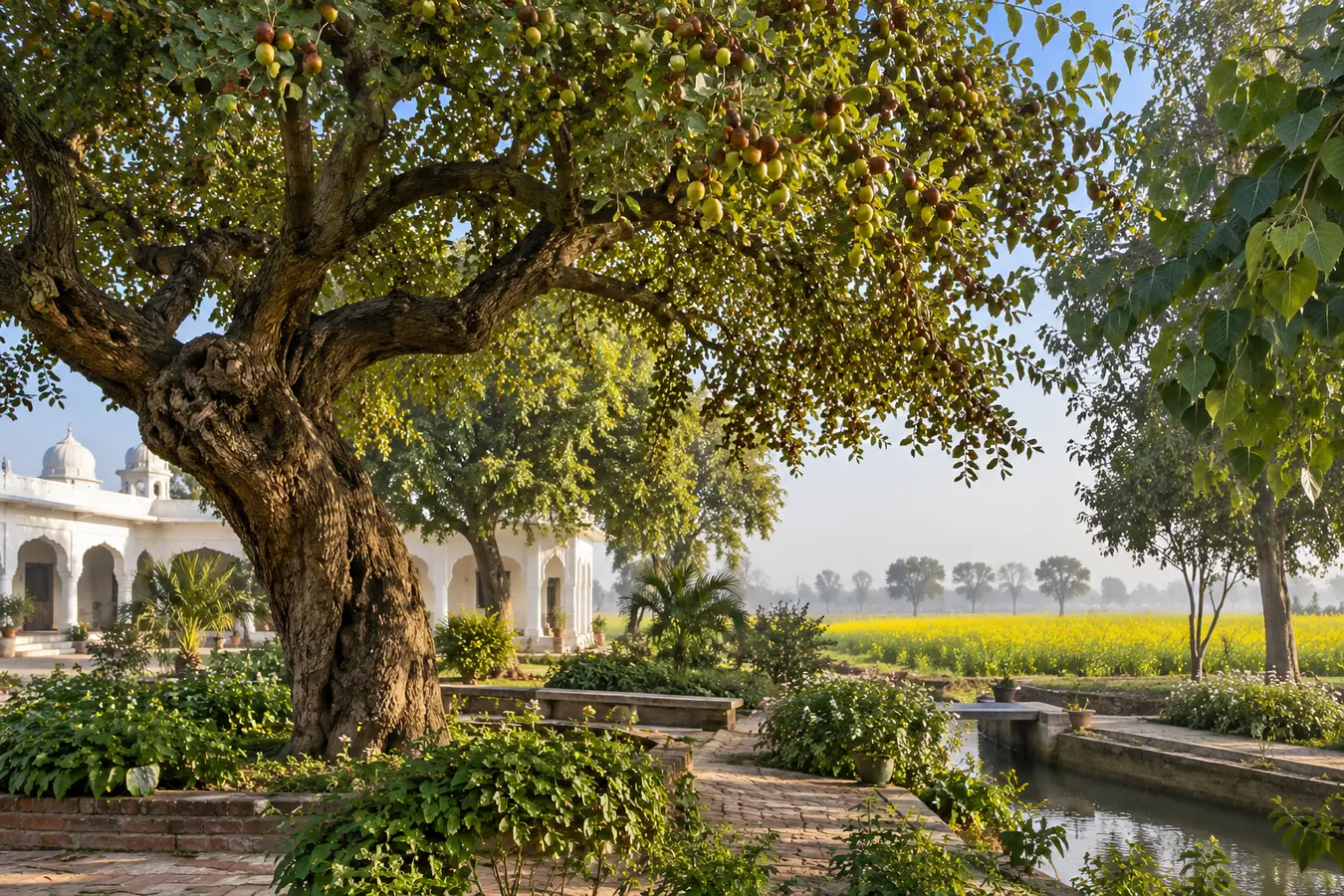
The Sikh route begins with documented living heritage rather than declaring a universal list of ‘Sikh plants’. Historic ber trees at Sri Harmandir Sahib show how horticultural care, memory and devotion can gather around specific trees.

Read the route source
Old fruiting ber tree in a Punjabi garden landscape with fields beyond
Acta Horticulturae · Historic ber trees in Amritsar

Swipe across the cultural landscape. Tap a plant to open its sourced note.

EDITORIAL BOUNDARY

Cultural associations vary by community, school, place and period. These notes describe documented traditions; they are not devotional instruction, medical advice or a claim that one plant has one fixed meaning.

CURATOR’S DRAWER13 catalogue items still need a source decisionOpen audit
ORIGIN AUDIT

Held aside until the evidence is ready.

These products remain covered by the catalogue audit, but they are not forced into a plant profile without a defensible ingredient or source identity.

QUICK SHOP

Product details