
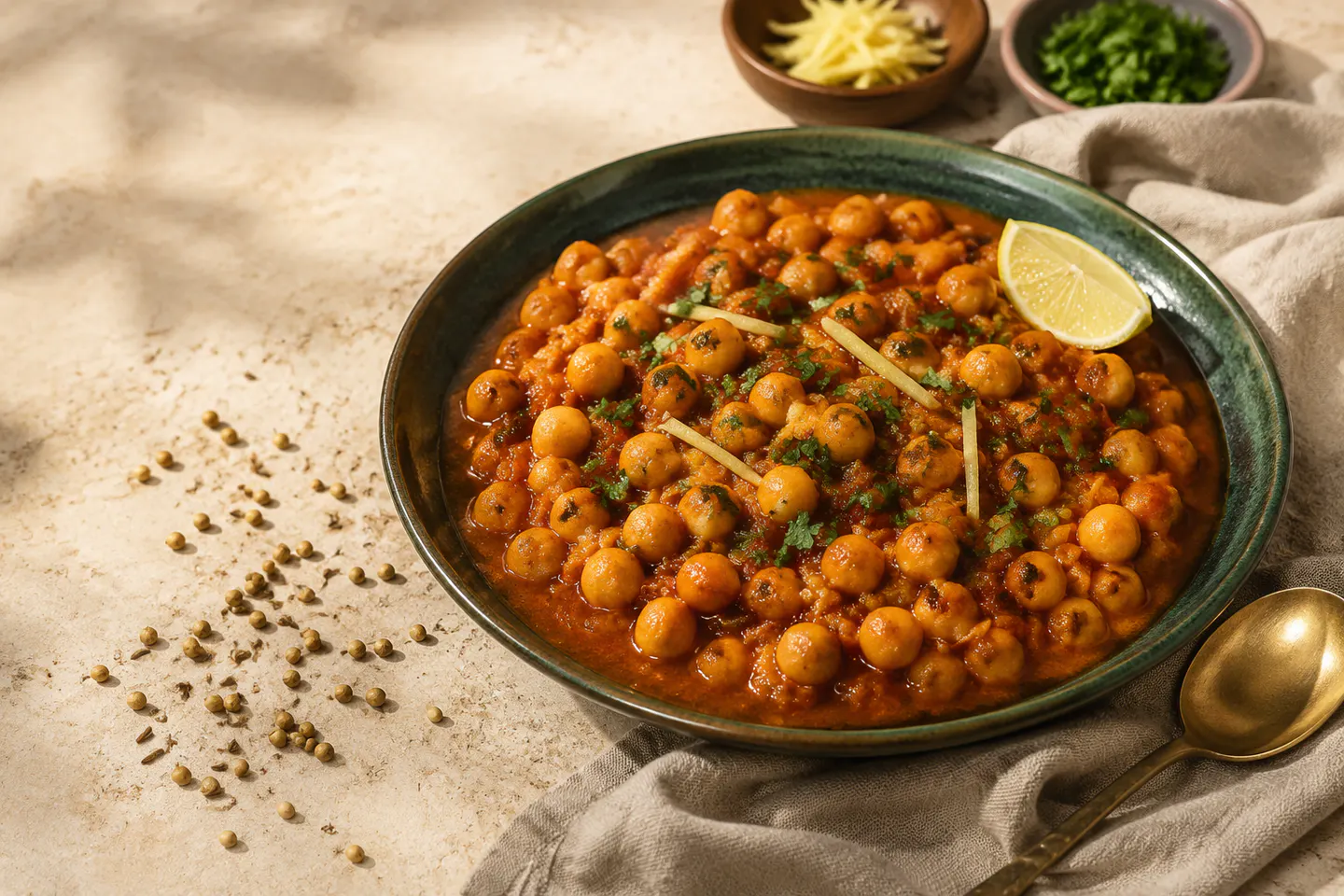
لاہوری چنے
Lahori Chana Masala
Whole chickpeas softened into a bright, earthy gravy, then finished with the spice cabinet that gives a Lahori bowl its warmth.
- Time
- 45 minutes after soaking
- Serves
- 4
- Table
- Vegetarian
Every ingredient stays in the recipe.
available now
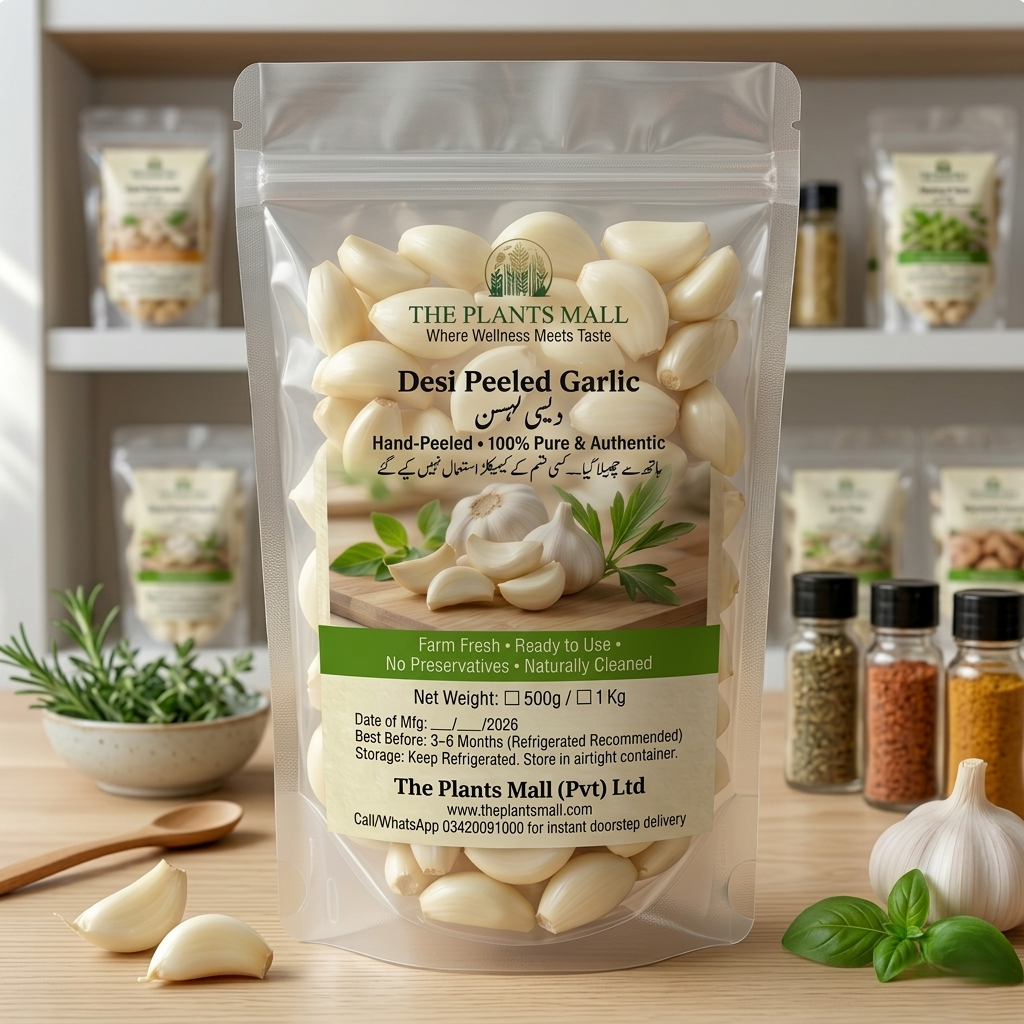 LehsanFresh garlic4 clovesCrushed
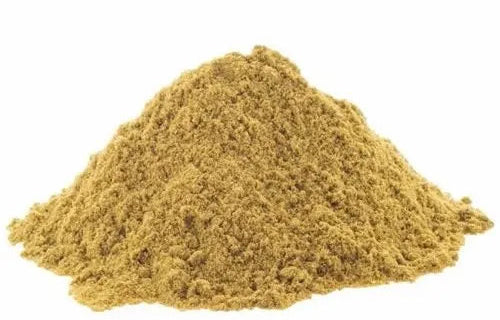 DhaniaCoriander powder2 tsp
 HaldiTurmeric powder½ tsp
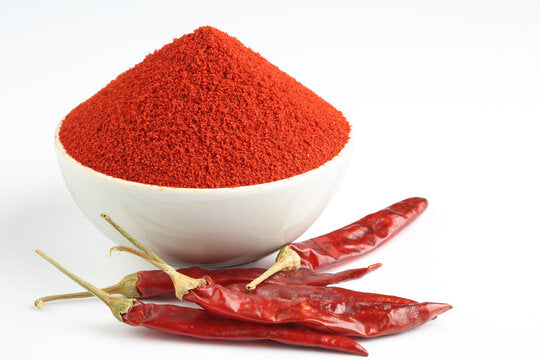 Lal mirchRed chilli powder1 tsp
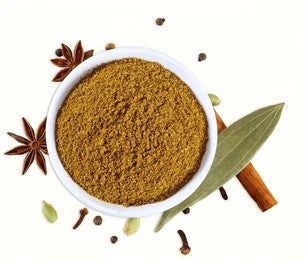 The finishing aromatic layerGaram masala powder1 tsp
Choose a real pack and add it here. The ingredient story remains a separate, optional layer.
Cook by change,
not only by time.
The sensory cue beside every step tells you what should actually happen in the pan.
Soften the chana
Drain the soaked chickpeas, cover with fresh water and simmer until completely tender. Keep a cup of the cooking liquid.
Build the base
Warm the mustard oil gently. Add cumin, then onion. Cook until the onion is soft and deeply golden before adding garlic and ginger.
Open the spices
Add tomato, coriander, turmeric, chilli and salt. Cook until the tomato collapses and the mixture looks cohesive rather than watery.
Bring it together
Fold in the chickpeas and enough reserved cooking liquid for a loose gravy. Crush a spoonful of chickpeas against the pan and simmer for 12–15 minutes.
Finish at the table
Turn off the heat, stir in garam masala and rest for five minutes. Finish with fresh coriander, ginger and lemon.
Before it became
a Lahori bowl.
Chickpea belongs to an older movement of crops, people and cooking knowledge. The exact dish is local; the plant’s route reaches much farther back.
Domesticated in the Fertile Crescent
Archaeological and genetic evidence places early domestication in Southwest Asia, close to the range of the wild progenitor.
East into the Indian subcontinent
By the Bronze Age, cultivated chickpea had travelled eastward, becoming part of the subcontinent’s agricultural and food landscape.
Selection created different seed worlds
Small, darker desi types and larger, pale Kabuli types reflect long selection and movement. The name Kabuli preserves one remembered route through Afghanistan.
The crop becomes a local language
In Lahore, chickpea is not a museum specimen. It becomes breakfast, street food and a household gravy shaped by local spice, texture and appetite.
Watch the texture come together.
Food Fusion’s chikar choley film is included as a visual companion for the draft. It demonstrates the style of dish; the Plants Mall method and ingredient quantities remain the recipe on this page.
Watch on YouTubeThe field behind the bowl.
These are source profiles, not more products. Open one to understand its botanical identity, current forms and cultivation rhythm.